
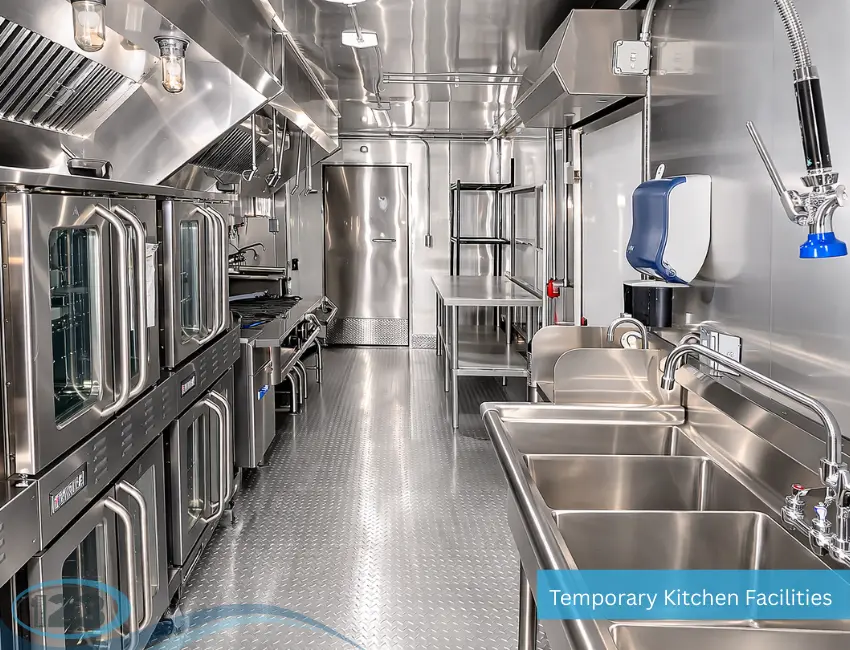
Temporary Cooking Facilities in Connecticut
Matching a Connecticut Rental to Its Food Operation
Connecticut’s FHWA highway inventory includes I-84, I-91, I-95; confirm the complete route and final site access when discussing kitchen transport.
Connecticut has separate consumer-protection and public-health entries in the FDA directory. That distinction is useful when asking who will review a particular food operation. Describe whether the unit will prepare restaurant meals, support institutional service or serve an event, rather than assuming every proposal follows one identical approval route.
The Ansonia-area links locate communities. They should help you find a relevant directory entry, not substitute for a site plan. Include the intended kitchen position and the path between preparation and service when explaining a temporary arrangement on a larger property.
An institutional project may need predictable meal handovers; a caterer may focus on preparation for a defined event. Translate those needs into an appliance list and a working sequence. Confirm which connections belong to the site and which arrangements need discussion before assigning dates to delivery, installation or the first cooking shift.
Planning references: FHWA interstate routes by state · FHWA urban areas and connecting routes · U.S. Census 2025 place geography · Connecticut food service references