
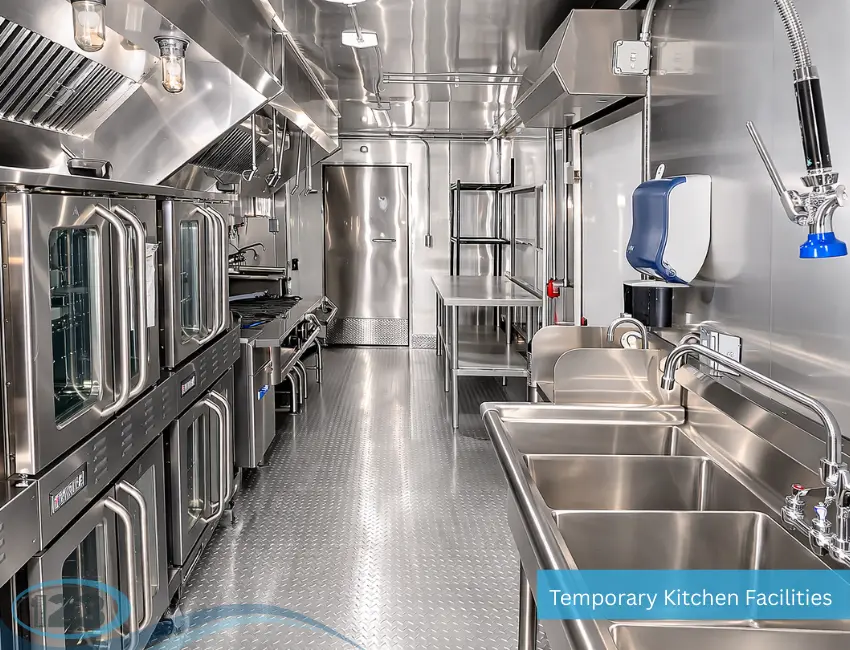
Temporary Cooking Facilities in California
California Food-Service Planning at the Property Level
I-5, I-10, I-105, I-110, I-210, I-405, I-605, I-710 serve the Los Angeles-Long Beach urban area in the FHWA route inventory; include the final access road and receiving entrance when planning a kitchen delivery.
The FDA's California reference points to the California Retail Food Code and the Department of Public Health food-safety program. Those are starting references for a commercial operation, while the authority reviewing the actual site should confirm how the temporary unit is classified and what must be submitted.
Around the Los Angeles anchor, the nearby links identify communities using Census coordinates. A customer should still specify the receiving address and where cooking will take place within the property. The route to a city and the final approach to a kitchen position solve different parts of the delivery discussion.
A restaurant renovation may retain an existing dining room while preparation moves outside. An event may instead need a self-contained flow from ingredient receipt to service. Explain that distinction, the appliances needed and the available connections before selecting equipment. Keep rental scheduling aligned with the operation's own approval and building-work timeline.
Planning references: FHWA interstate routes by state · FHWA urban areas and connecting routes · U.S. Census 2025 place geography · California food service references